How a Smart Toilet and a Toilet with a Bidet Function Work
A smart toilet is a ceramic bowl plus an electronic cover with a heater, nozzle, dryer and sensors. Here is how each part works and what you need to get it all running in your home.
· 8 min read
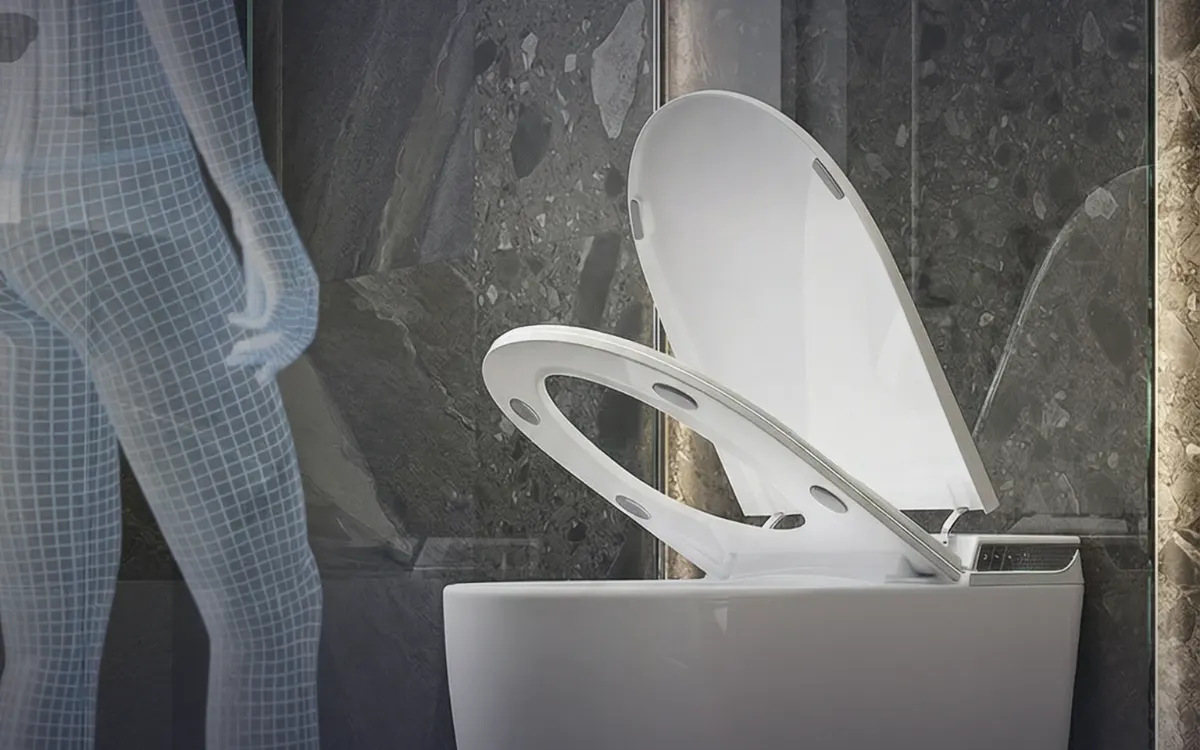
How a smart toilet is built
How a smart toilet works is easier to understand if you split it into two parts. The first is the ceramic bowl: on our models it is rimless, with a Tornado swirl flush. The second is the electronic cover with the seat and control unit, which houses the water heater, bidet nozzle, dryer, sensors and UV lamp.
All of this runs on a regular 220 V outlet and connects to the water supply. You don't need a separate hot water line: the toilet heats the bidet water itself.
| Component | What it does |
|---|---|
| Instant water heater | Heats water for the bidet on the fly |
| Bidet nozzle | Delivers the wash stream and cleans itself |
| Dryer | Dries with warm air after the wash |
| Seat heating | Keeps the seat warm |
| Proximity sensor and foot sensor | Open the lid, lift the seat ring, start the flush |
| Voice module | Recognizes 8 commands in Russian |
| UV lamp | Disinfects the nozzle |
| Foam shield | Covers the water in the bowl with foam |
| Tank or impulse valve | Handles the flush |
How a bidet toilet works: from the water supply to the nozzle
The main thing that sets a smart toilet apart from a regular one is the built-in bidet. Here is how it works:
- Water from the supply line passes through the instant heater and is heated on the fly on its way to the nozzle. There is no tank of pre-heated water, so the wash always uses fresh water.
- The nozzle extends from under the seat and delivers a stream. The mode depends on the model: standard, oscillating (the nozzle moves), cold-hot massage on D92 and O92, women's wash on D93 and O93.
- The nozzle cleans itself, and ultraviolet light treats it, destroying up to 99.9% of bacteria without chemicals.
- After the wash, you can turn on the warm air dryer.
You choose the water temperature: 34, 37 or 40 °C on D92, D93 and D94, and 4 levels on other models. Learn more about heating on the instant heating page; models with different modes are gathered in the collection of toilets with bidet and dryer.
Warm water and massage are gentler on the skin than toilet paper. And since the nozzle is built into the toilet itself, you don't need a separate bidet in the bathroom, so the space stays free.
Dryer and seat heating
The dryer is a stream of warm air after the wash. On D92, D93 and D94 its temperature is 35, 43 or 52 °C; other models have 4 levels.
Seat heating is also adjustable by level: 34, 37 or 40 °C on D92, D93 and D94, and 4 levels on the others. You notice it most in winter: sitting on a warm seat is nicer than on a cold one. To save electricity, all models have an eco mode — an energy-saving mode.
Sensors: how a touchless smart toilet works
The proximity sensor is a radar that detects a person from up to 1.5 m away. When you approach, it lifts the lid, and when you leave, it closes the lid and starts the flush. So you hardly ever have to touch the toilet with your hands.
The foot sensor, if the model has one, complements the radar: with a wave of the foot you can open the lid, lift the seat ring or start the flush. It works together with the radar or on its own. Learn more on the automatic lid opening page.
Voice control works through a built-in speech recognition module: it understands 8 commands in Russian — for example, for water temperature, drying, the lid and the flush. And the night bowl light comes in handy when you don't want to turn on the overhead light.
Flushing: built-in tank or impulse valve
Smart toilets flush in different ways, and this determines what water pressure your home needs.
| Flush type | Models | What the water supply needs |
|---|---|---|
| Built-in 5.3 L tank | All wall-hung D series models | Any pressure will do |
| Built-in tank | Floor-standing O92B and O93B | Suitable if the pressure is low or unstable |
| Impulse valve, no tank | Floor-standing O92, O93, O92F, O93F, O24 | Good flow pressure |
Models with an impulse valve have no tank, so they need a good flow of water straight from the supply line to flush. Pressure in bar doesn't tell you this: even at 10 bar, the flow drops sharply if the supply line has adapters, for example a 3/4 → 1/2 → 3/4 hose.
It's easy to check: take an empty 5-liter bottle and run water for 15 seconds from the hose that will feed the toilet. If you collect 4.5 liters (about 18 L/min), the flush will work. Learn more in the article on the tankless impulse-valve toilet.
The flush starts automatically when you leave, and it can also be started by voice or with the foot sensor. The D88–D93 series models have a battery: if the power goes out, the toilet can flush up to 50 times.
Hygiene: UV sterilization and foam shield
The UV lamp treats the nozzle with ultraviolet light and destroys up to 99.9% of bacteria — without chemicals. The lamp is rated for 8,000 hours of operation, which is about 3–4 years. Learn more on the UV sterilization page.
Before use, the foam shield covers the water in the bowl with a layer of foam. It keeps splashes from rising and holds in odors. The foam shield is built into all our models except VECTOR D88, which has an external one. The foam needs topping up from time to time: see our article on foam and consumables.
What a smart toilet needs to work
To work, it needs a water supply and a 220 V outlet next to the toilet. A floor-standing model is installed like a regular toilet, without drilling. A wall-hung model is mounted on an in-wall frame. Learn more in the article how to install a smart toilet and on the professional installation page (a service for Moscow and the Moscow Region).
Another feature is size. Most of our models are 588–590 mm deep — about 59 cm instead of the usual 70 cm for a regular toilet. In a small bathroom, the difference is noticeable.
Wall-hung vs floor-standing: what's the difference
Inside, wall-hung and floor-standing models work the same way — the difference is in mounting and flushing. Wall-hung D series models (with the letter D in the name) are mounted on an in-wall frame, and all of them have a built-in 5.3 L tank. Floor-standing O series models stand on the floor like a regular toilet; if there is no letter B in the name, there is no tank and the flush runs through an impulse valve.
The letter F in the name (O92F, O93F) means a floor outlet; without it, the outlet goes into the wall. The black panel is a decorative cover: it can be fitted to any floor-standing O series model.
To see how it all works in real life, watch the in-depth review of MOMENT D93 or visit the showroom at 49 Arbat Street, where you can try all models.
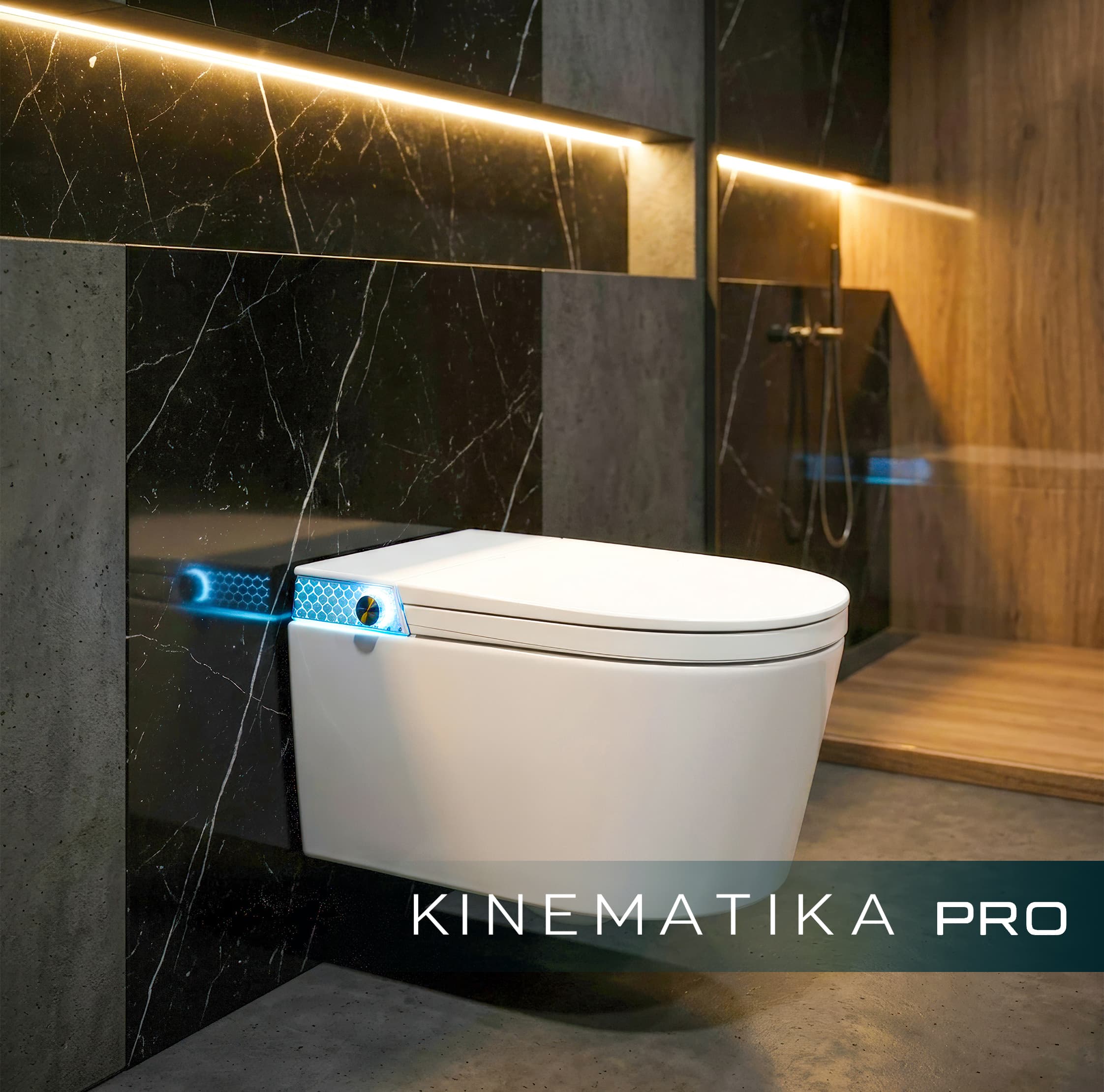
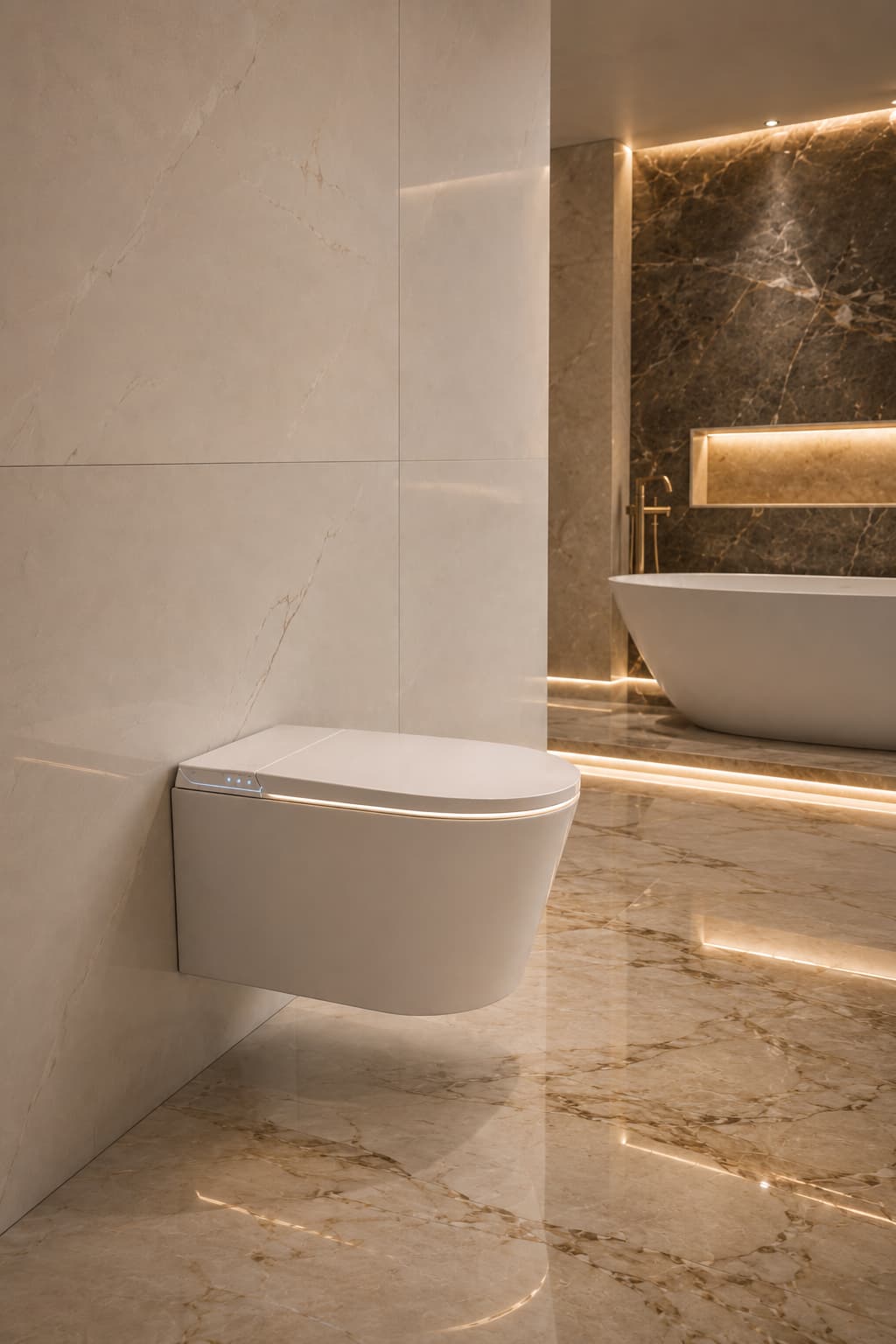
Models in this article

Questions and answers
How does a smart toilet work?
The ceramic bowl flushes like a regular toilet, while the electronic cover heats the water and seat, delivers water through the bidet nozzle, dries with warm air and, using sensors, opens by itself and starts the flush. It runs on a 220 V outlet.
How does a toilet with a bidet function work?
Water from the supply line is heated by an instant heater and delivered through a retractable nozzle. The nozzle cleans itself and is treated with ultraviolet light.
Does a smart toilet need hot water?
No, it heats the bidet water itself with an instant heater. All you need is a water supply and a 220 V outlet.
Does a smart toilet work without electricity?
Seat heating, the bidet wash and the dryer don't work without electricity. The D88–D93 series models have a battery — up to 50 flushes during a power outage.
What water pressure does a smart toilet need?
Models with a built-in tank work with any pressure. Tankless models need good flow pressure: water from the supply hose should fill a 5-liter bottle to 4.5 liters in 15 seconds.