Japanese Toilet: What It Is and Where to Buy in Russia
In Russia, a “Japanese toilet” means a smart bidet toilet: it lifts the lid by itself, washes you with warm water, dries and flushes. Here's how it works, how to use it and where to buy one with a warranty.
· 8 min read
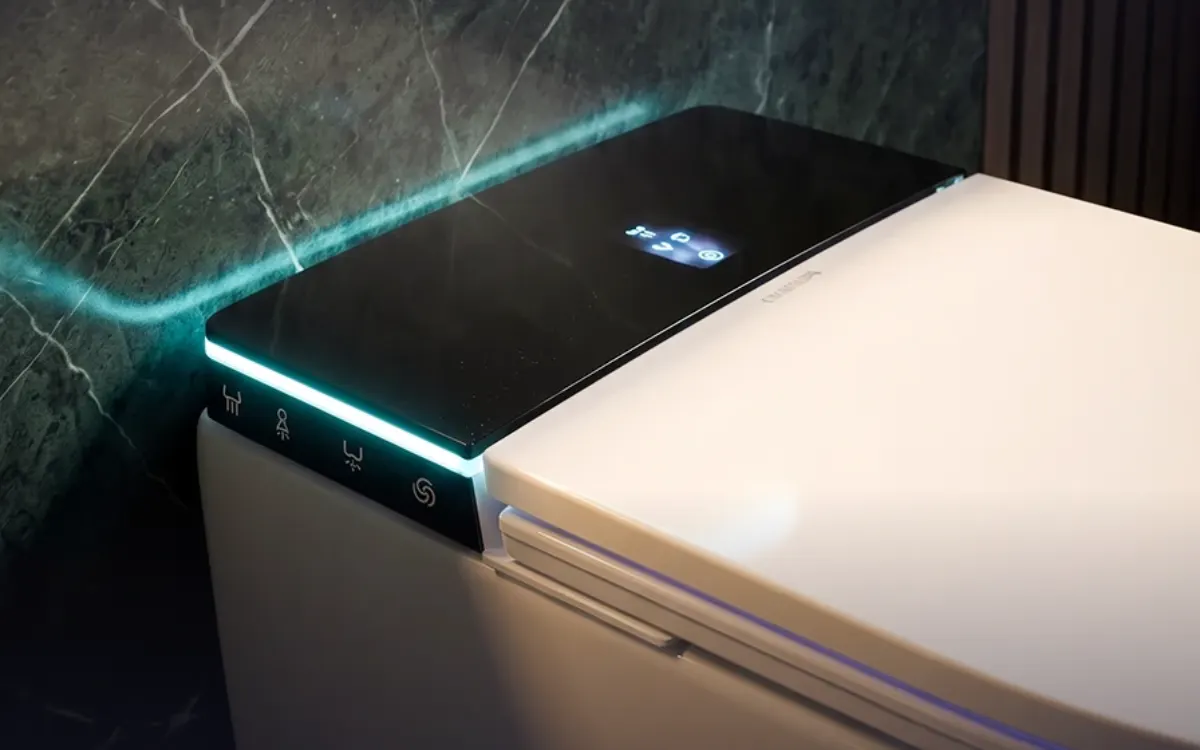
What is a Japanese toilet
“Japanese toilet” is the popular name for a smart bidet toilet. It got the name because toilets like these first became widespread in Japan. In Russia, people also search for the same thing under other names: “smart toilet”, “electronic bidet toilet”, “smart bidet toilet”, “toilet with a bidet function”.
It's important to understand that “Japanese” here describes a type of device, not the country where a particular toilet is made. When someone looks for a Japanese toilet, they are looking for a set of features: a bidet, a warm seat, a dryer, an automatic lid and button-free flushing.
From the outside, it's a toilet with a large seat housing. Inside are the electronics, an on-demand water heater, the bidet nozzle and the dryer. It runs on a 220 V outlet and connects to the water supply and drain almost the same way as a regular toilet.
How a Japanese toilet differs from a toilet with a bidet function
A search for “toilet with a bidet function” often turns up simple models: ceramics with a nozzle and a tap, no electronics. A Japanese — that is, smart — toilet works differently. It heats the water and the seat by itself, dries with warm air, cleans and sterilizes the nozzle, raises and lowers the lid, flushes without a button and responds to voice commands. So when comparing prices, look not at the word “bidet” in the name but at the list of features.
What a smart bidet toilet can do
The feature set depends on the model, but the core is the same on every Kinematika Pro smart toilet:
- Bidet — a warm-water wash. The nozzle cleans itself.
- Water and seat heating. Water is heated on demand, right during the wash, so it's always fresh rather than sitting in a tank.
- Warm-air dryer — after the wash you can do without toilet paper.
- UV nozzle sterilization — ultraviolet light removes up to 99.9% of bacteria without chemicals.
- Auto lid and auto flush. The proximity sensor detects a person up to 1.5 m away: the lid rises as you approach, closes when you leave, and the toilet flushes by itself.
- Foam Shield. Foam covers the water in the bowl — no splashes and no odor.
- Night bowl light, eco mode, a rimless bowl and the Tornado swirl flush.
A word about voice. “Talking Japanese toilet” is another common search. All our models understand voice commands in Russian: there are 8 of them — water temperature, drying, lid, flush and more. You can control the toilet hands-free, without a remote.
Some models also have a feminine wash — a separate mode for delicate hygiene — and a hot-and-cold massage. To see which models do what, check our selection of toilets with bidet and dryer.
How to use it: five steps
There are plenty of buttons and modes, but using a Japanese toilet is easier than it looks. A typical routine goes like this:
- Walk up to the toilet — the proximity sensor lifts the lid. If the model has a foot sensor, you can raise the lid or the seat ring with a wave of your foot.
- Sit down — the seat is already warm, and foam has covered the water in the bowl.
- Start the wash with a button on the control panel or by voice.
- Turn on the warm-air dryer.
- Stand up and walk away — the toilet closes the lid and flushes by itself.
After purchase, it's worth setting the seat, water and dryer temperatures once. On D92, D93 and D94 they are set in degrees: water and seat at 34, 37 or 40 °C, dryer at 35, 43 or 52 °C. Other models have 4 levels each.
Warm water and a gentle wash are kinder to the skin than paper. If you're not sure you'll like it, visit our showroom: you can try every feature in person.
How to choose a model
Before buying, answer a few questions — they rule out unsuitable models faster than any ranking.
- Wall-hung or floor-standing. A wall-hung toilet mounts on an in-wall frame; a floor-standing one sits on the floor like a regular toilet. More in our article on in-wall frames for smart toilets.
- With a tank or tankless. Tankless models flush through an impulse valve straight from the water supply — they need good flow pressure. How to check it in 15 seconds is explained in our article on the tankless impulse toilet.
- Where your drain goes. The letter F in our model names means a floor drain outlet; without F, the drain goes into the wall.
- Which modes you need. Feminine wash and massage are not available on every model.
All the criteria in order are in our guide how to choose a smart toilet.
Where to buy a Japanese toilet in Russia
There are two routes. The first is to order a smart toilet from China through a marketplace. The price may be lower, but who will repair it, where to get a spare part and whether the toilet understands spoken Russian — you'll have to figure that out yourself.
The second is to buy from a store in Russia that takes responsibility for the product. That's how Kinematika Pro works:
- Showroom in Moscow: 49 Arbat St., a 4–5 minute walk from Smolenskaya metro station, open daily from 12:00 to 21:00. You can see and try every model.
- Delivery across Russia. In Moscow — by our own courier in 1–2 days, free of charge; to the regions — by transport companies in 3–7 business days. We ship from our Moscow warehouse on the day of payment.
- 1-year warranty on all models: electronics, ceramics and mechanisms. You can return the toilet within 14 days if it hasn't been used.
- Service for the regions: diagnostics over a video call, and all spare parts for our models are in stock at our Moscow warehouse.
- Installation by a technician in Moscow and the Moscow Region — as a separate service.
You can order on our website, as well as on Ozon and Yandex Market.
How much does a smart bidet toilet cost
Current prices for all Kinematika Pro smart toilets are listed in the catalog. The entry-level model is the floor-standing INERTIA O24, which is being discontinued. The floor-standing range also includes ACCELERATION O92 and O92B and MOMENT O93 and O93B, while the wall-hung D series runs from IMPULSE D91 up to D93 MOMENT GREY.
Price doesn't affect the core features — bidet, dryer, heating and Russian voice control come with every model — but rather the extras: feminine wash, massage, temperature in degrees, mounting type and design. You can compare models by specifications on the comparison page.
What you'll need to buy later
Running costs after purchase are small. The carbon filter is replaced every 6–12 months. The UV lamp is rated for 8,000 hours — about 3–4 years. The Foam Shield needs a special foam: a 680 ml bottle can be ordered in the accessories section along with spare parts.
Models in this article
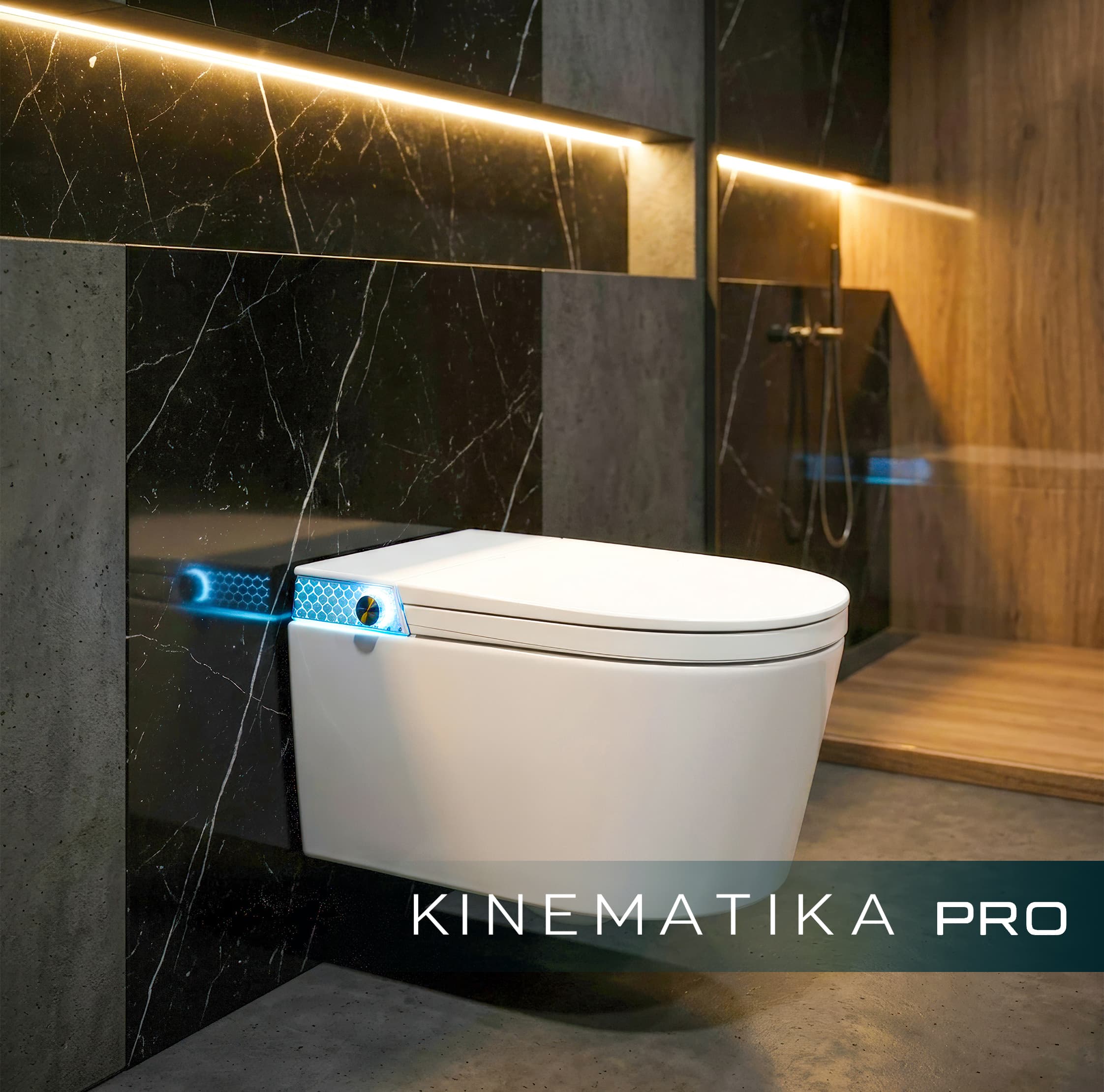
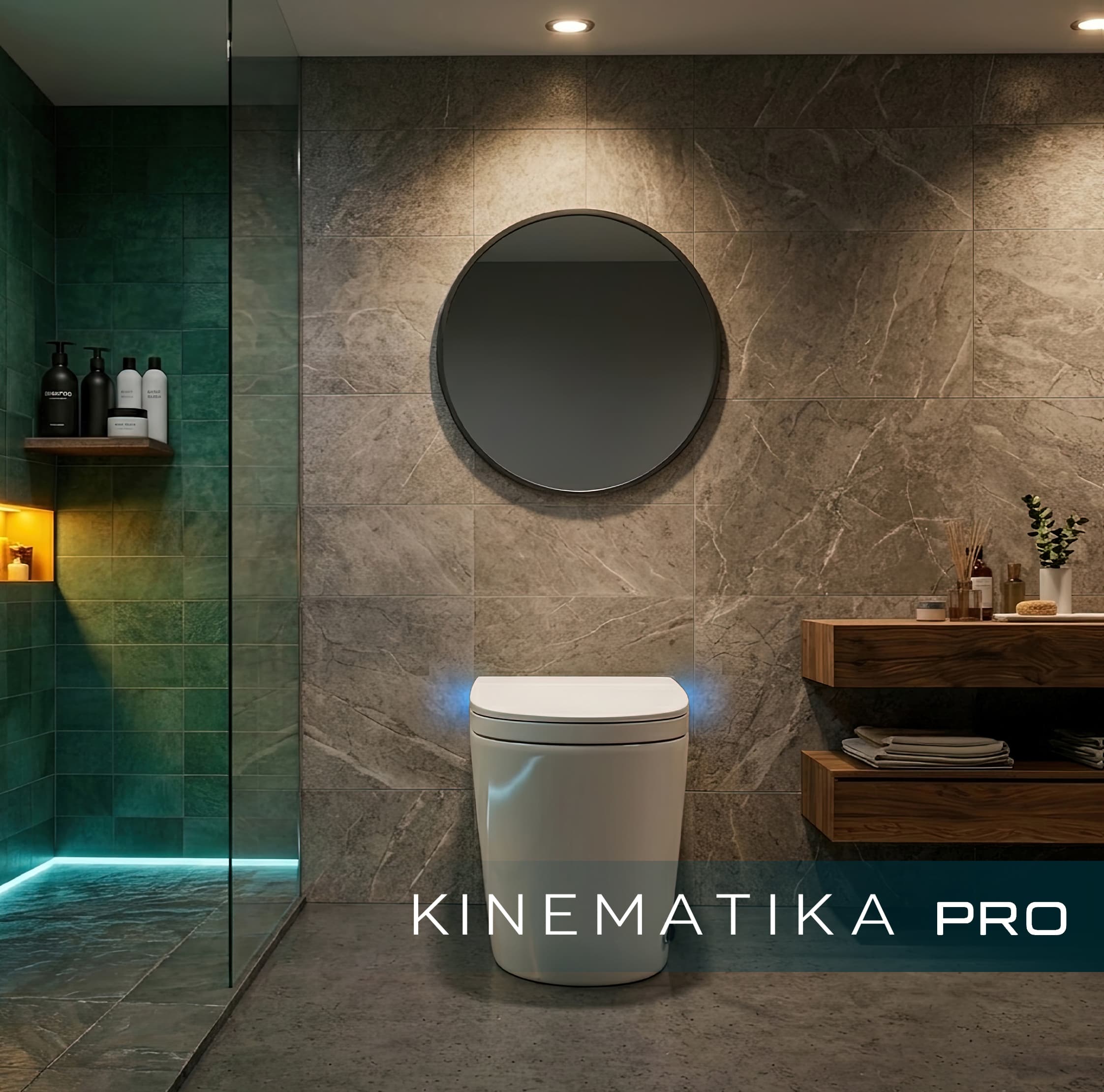

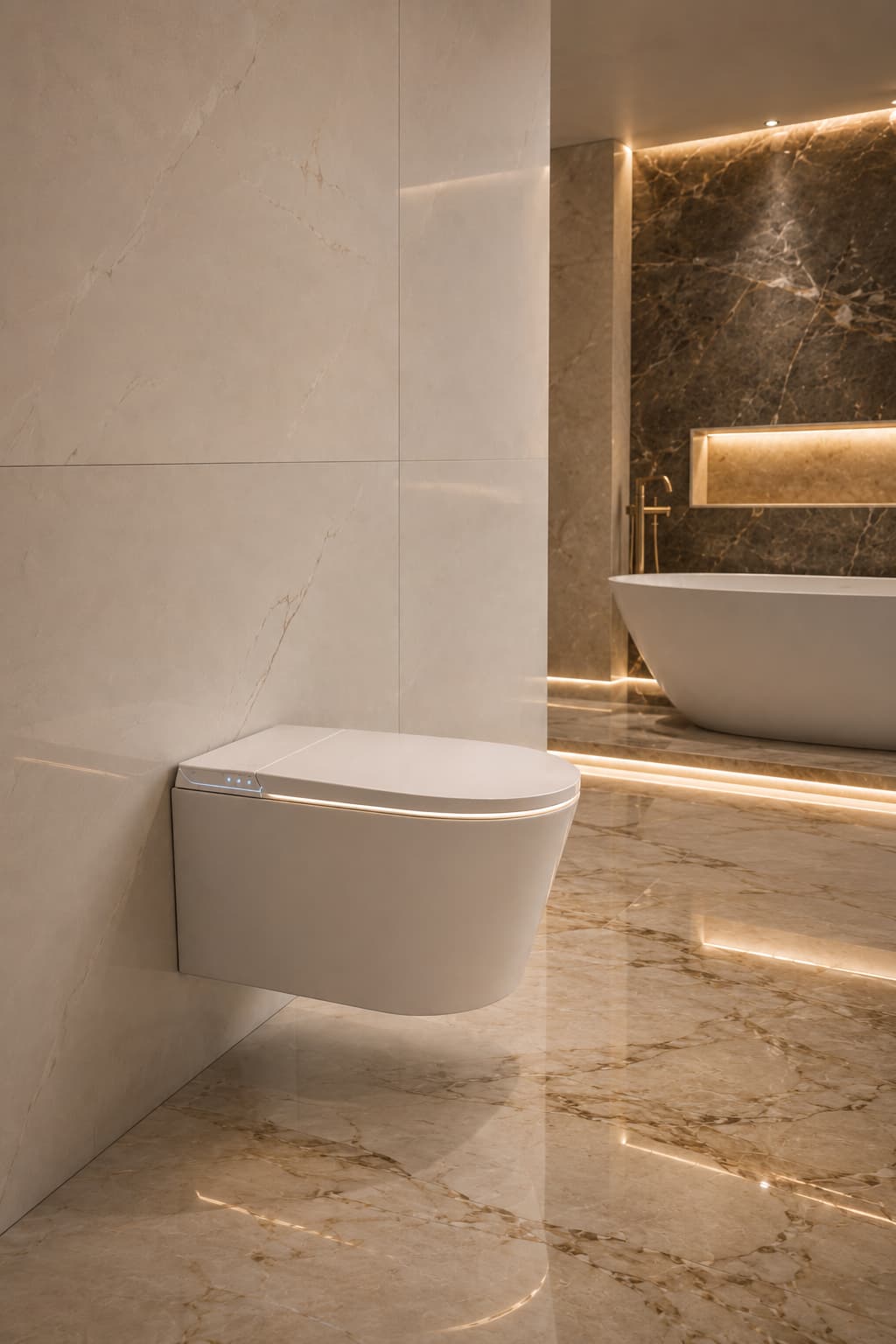
Questions and answers
Why is a smart toilet called Japanese?
Because toilets like these first became widespread in Japan. Today people call any smart bidet toilet with heating, a wash and a dryer “Japanese”, wherever it's made.
How much does a Japanese toilet cost in Moscow?
Current prices for Kinematika Pro smart toilets are listed in the catalog on our website. You can see and try every model at our showroom on Arbat.
Does a Japanese toilet have heating?
Yes. All our models have a heated seat, on-demand water heating for the wash and a warm-air dryer.
Does a Japanese toilet work without electricity?
Models in the D88–D93 series have a battery — up to 50 flushes without power. For other models, please check with our manager.
Does a Japanese toilet understand Russian?
Kinematika Pro smart toilets understand 8 voice commands in Russian: water temperature, drying, lid, flush and more.